
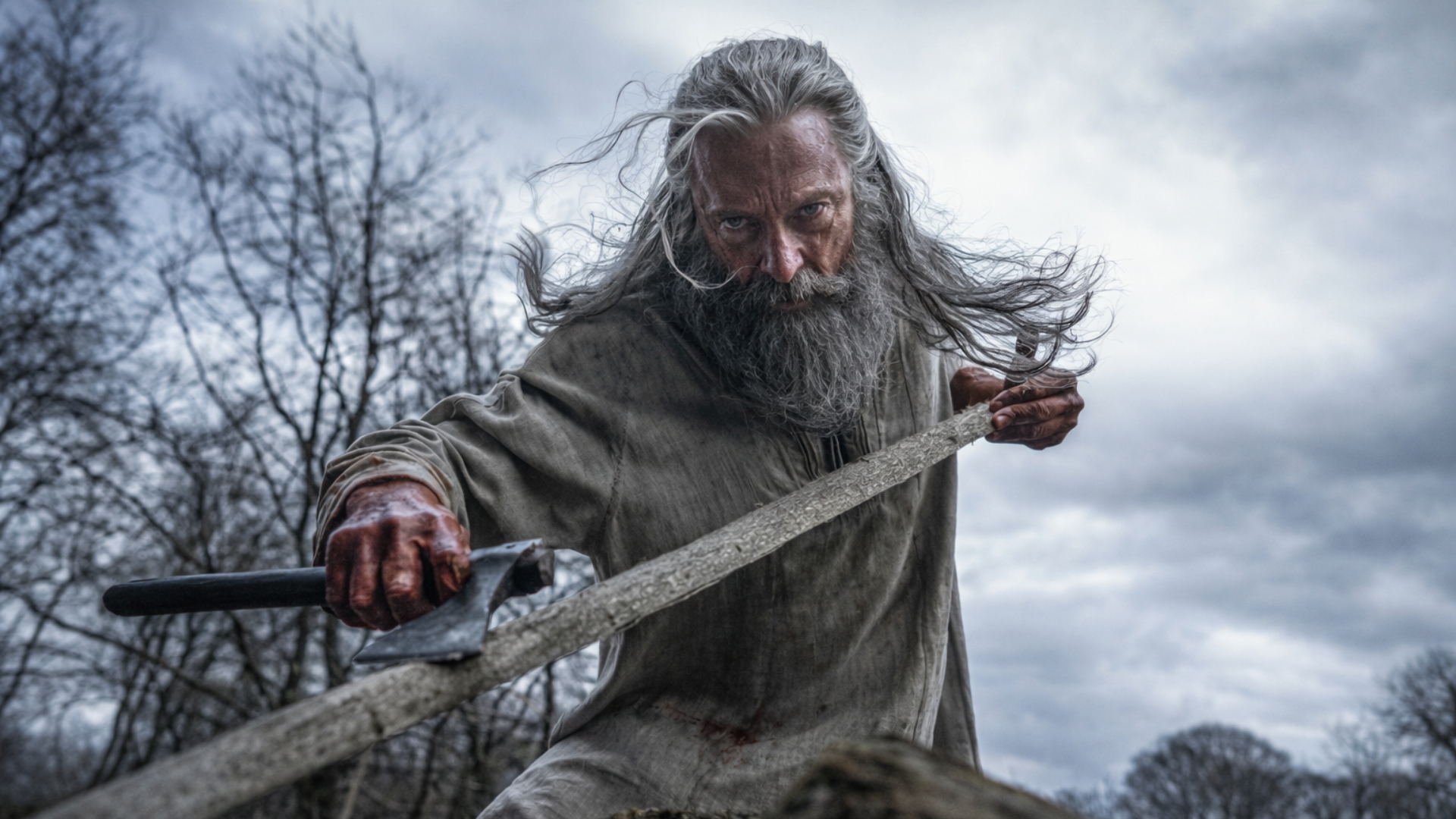
A24’s The Death of Robin Hood begins with Hugh jackman’s gravelly voice: “People speak of Robin Hood, tell his stories, they’re all lies.” From the start, the trailer dismantles the cheerful outlaw image and replaces it with brutal, bloody scenes. The tagline He was no hero sets the tone for a darker retelling.
Michael Sarnoski, the film’s writer-director, explains Robin Hood was never a single figure but an amalgamation of outlaws whose stories merged over time. Since “Robin” was a common name in medieval England, oral tales gradually evolved into legend. Moreover, the earliest written accounts appeared centuries later, making the more romanticized than factual. To ground his film, Sarnoski sets the story in 1274 AD and films in Northern Ireland, capturing the harsh Celtic landscape.
Medieval life, he stresses, was violent and unforgiving. Survival was grueling, and battles were often peasants clashing with crude weapons rather than knights in armor. Consequently, he asked: What would an outlaw look like in such a world? Even early ballads portray Robin committing grim acts chopping off heads and disguising himself with corpses, far removed from Disney’s playful hero.
In this retelling, Jodie Comer’s prioress becomes a healer instead of a villain. Inspired by Hildegard von Bingen, she leads a priory that shelters orphans and lepers. When she nurses a half-dead Robin Hood back to health, the conflict shifts: can the outlaw find redemption, and will his healer uncover the truth about his violent past?
Sarnoski’s fascination began in childhood, watching Disney’s Robin Hood with his father. Later, a mentor gifted him a 1940s book of ballads, including The Death of Robin Hood. The idea that a folkloric hero could die intrigued him and eventually inspired this script. While he stays true to the imagery of Robin’s death, he reshapes the circumstances to explore morality, violence, and salvation.
Ultimately, The Death of Robin Hood strips away the romantic veneer and confronts the brutality behind the legend. Jackman’s outlaw is no merry thief but a man haunted by murder, facing the possibility of redemption. Through Sarnoski’s revisionist lens, the film becomes a historically grounded, morally complex, and unflinchingly violent vision of myth and humanity.



Leave a Comment