
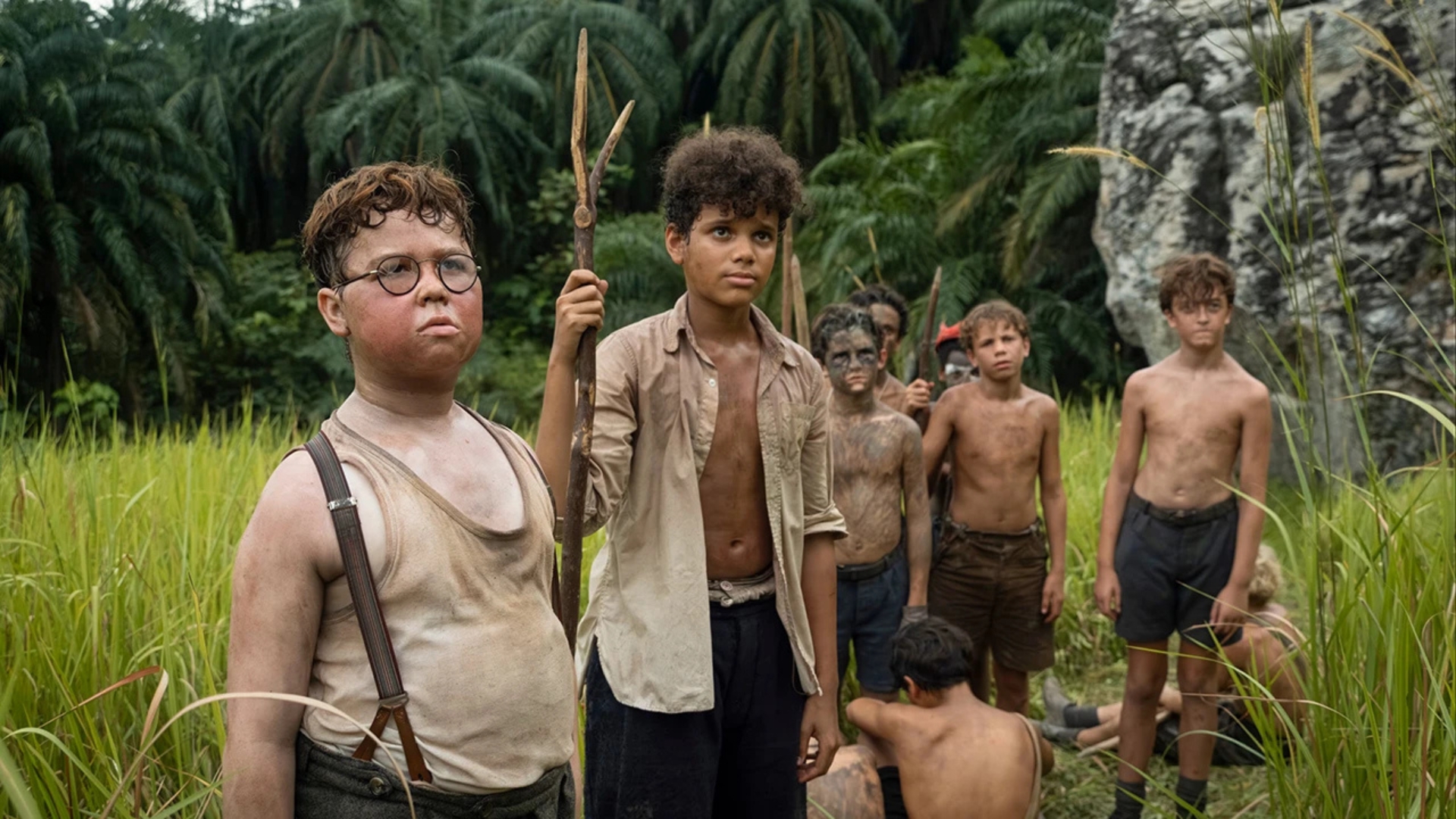
Jack Thorne’s adaptation of Lord of the Flies establishes nature as the lesser responsibility, while nurture is the main source of blame.
The 1950’s setting shows Piggy (David McKenna) surviving a plane crash together with Ralph (Winston Sawyers), who becomes the natural leader. Piggy‘s push for rules falters as Ralph wins the vote, and Jack (Lox Pratt), as a brash commander who leads his choir-boy militia, takes control of the situation. The island quickly disintegrates into three main elements, which include arrogance, fear, and greed for power.
The flashback shows each boy who reflects his father’s existence because Ralph studies grief while Simon (Ike Talbut) fights against judgement and Jack learns to inflict pain. Thorne and Marc Munden show that people learn to neglect others through violence which they pass to others like inherited scars.
The series, presenting visually eerie yet strained, avoids horror spectacle, opting for a cold, deliberate drama. It’s broader and harsher, less feral than Yellowjackets, but enduring as a cautionary tale.
By reframing collapse as a generational echo of fathers failures, Netflix’s Lord of the Flies warns that cycles of neglect resurfaces unless met with compassion and accountability.





Leave a Comment